

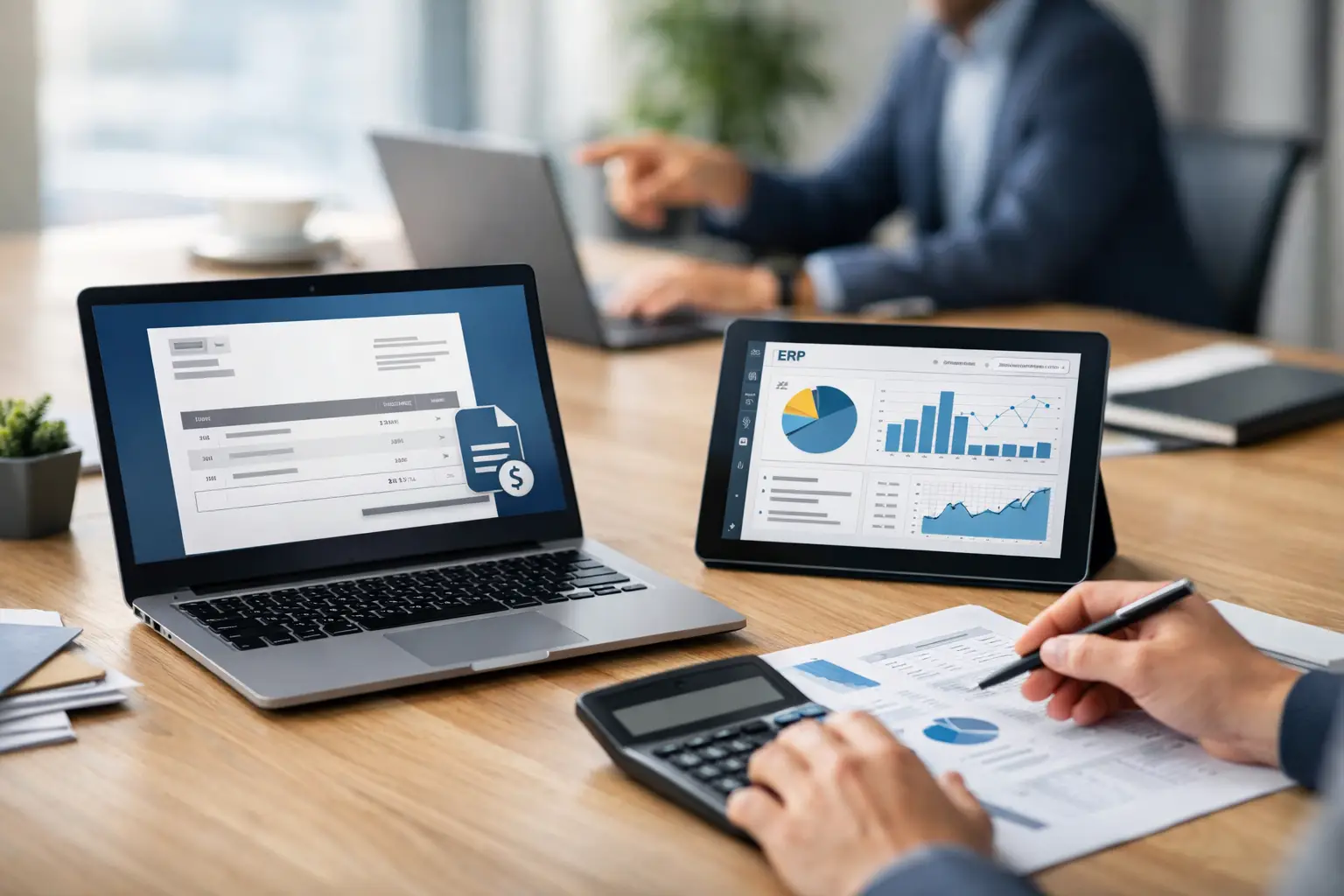
Best InvoiceNow Ready ERP Systems for SMEs
If your finance team is still exporting invoice data, rekeying customer details, and chasing document mismatches across email threads, InvoiceNow is not just a compliance upgrade. It is a process upgrade. The best InvoiceNow ready ERP systems do more than send e-invoices through the right network. They reduce manual handling, improve traceability, and give your business tighter control over billing, receivables, purchasing, and reporting.
For SMEs, that distinction matters. Plenty of systems can claim InvoiceNow compatibility at a surface level. Far fewer can support the operational changes that make e-invoicing worthwhile once your transaction volume grows, approval layers increase, and month-end pressure starts to build.
What makes the best InvoiceNow ready ERP systems different
An ERP should not treat InvoiceNow as an isolated feature. If e-invoicing sits outside your core finance and operations workflows, your team may still end up fixing errors manually, reconciling documents after the fact, and working around disconnected data. That defeats much of the value.
The best InvoiceNow ready ERP systems connect e-invoicing directly to customer master data, sales orders, delivery fulfillment, tax treatment, accounts receivable, and audit records. That means when an invoice is issued through InvoiceNow, it is not just transmitted correctly. It is also tied back to the transaction that created it, the inventory movement behind it, and the payment collection process that follows.
This is where many buying decisions go wrong. Decision-makers often focus on whether the system can send an InvoiceNow document. A more useful question is whether the ERP can support the full invoicing lifecycle without forcing staff to jump between modules, spreadsheets, or third-party tools.
InvoiceNow readiness is really about workflow readiness
InvoiceNow is built on Peppol standards, so technical compatibility matters. But for an SME, operational readiness matters just as much.
A finance manager usually needs more than document submission. They need confidence that tax codes are applied correctly, customer records are standardized, invoice statuses are visible, and exceptions can be resolved without slowing down cash collection. An operations leader wants billing to reflect actual deliveries or service completion. A business owner wants faster invoicing without losing control.
That is why a good ERP evaluation should look beyond the e-invoicing checkbox. It should examine how the system handles source data quality, approval discipline, stock or service references, and downstream reconciliation. If those areas are weak, InvoiceNow may simply expose existing process issues faster.
Core criteria for choosing an InvoiceNow ready ERP
The first requirement is native integration with finance operations. Your invoicing function should sit inside the same system that manages accounting, receivables, purchasing, inventory, and reporting. When those records live together, teams get real-time visibility and fewer mismatches.
The second requirement is structured master data. InvoiceNow works best when customer information, item records, tax settings, and payment terms are maintained consistently. An ERP that allows loose data entry everywhere may create more exceptions than your team expects.
The third requirement is clear auditability. SMEs often underestimate how much time is lost checking whether an invoice was sent, accepted, rejected, corrected, or paid. A serious ERP should show document status, user activity, and related financial postings in a way that supports internal control and faster month-end closing.
The fourth requirement is practical scalability. Some businesses only need basic e-invoicing today, but growth changes the picture. More entities, more warehouses, more approval rules, and more channels mean your ERP has to keep up. If InvoiceNow works only for a narrow billing scenario, you may face another system change sooner than planned.
Best InvoiceNow ready ERP systems should support more than accounts
E-invoicing starts in finance, but its quality depends on upstream operations. If your sales team enters one set of terms, your warehouse fulfills against another, and your finance team invoices from a third source, disputes are almost guaranteed.
That is why the strongest ERP setups support end-to-end transaction flow. A sales order should move into fulfillment, delivery confirmation, invoicing, and receivables without repeated manual input. For trading, distribution, retail, F&B, and project-based service businesses, this matters even more because invoice timing often depends on stock movement, delivery proof, or milestone completion.
This is also where ERP adoption becomes easier to justify. InvoiceNow is not just a digital transmission method. It becomes part of a wider process improvement effort that reduces duplicate work, shortens billing cycles, and improves reporting accuracy.
Where some systems fall short
A common weakness is partial implementation. A business activates InvoiceNow, but customer records are incomplete, tax mappings are inconsistent, and approval workflows remain outside the ERP. The result is a technically enabled process that still relies on manual checking.
Another issue is poor visibility across teams. Finance may know an invoice failed, but sales does not know why, and operations cannot verify whether the underlying transaction was correct. Without shared data and status tracking, resolution takes longer than it should.
There is also the question of usability. SMEs do not have large admin teams to maintain overly complex systems. If creating, validating, and monitoring InvoiceNow transactions requires specialist intervention every time, the business will struggle to sustain adoption.
What SMEs in Singapore should pay attention to
For companies operating in Singapore, InvoiceNow readiness needs to be assessed in the context of local compliance and digitalization expectations. That includes Peppol connectivity, GST handling, and the practical realities of getting staff onto a more controlled invoicing process.
This is where implementation approach matters. A system may have the right modules on paper, but if deployment does not align finance, sales, purchasing, and inventory workflows from the start, the business may not see the expected efficiency gains. SMEs should pay close attention to how quickly users can adopt the process, how exceptions are handled, and whether reporting supports management review.
A2000ERP fits this requirement well because it approaches InvoiceNow as part of a broader finance and operations framework rather than a stand-alone add-on. That matters for businesses that want faster invoicing, clearer audit trails, and less dependence on spreadsheets as they grow.
How to judge fit based on your operating model
Not every business needs the same type of InvoiceNow-enabled ERP.
If you run a service-led company with straightforward billing, your priority may be accurate customer records, recurring invoice control, and faster reconciliation. If you are product-led, inventory and fulfillment integration become much more important because invoicing depends on stock movements, pricing structures, and delivery status.
If your business operates across multiple functions, entities, or locations, then role-based approvals, consolidated visibility, and standardized master data will matter more than basic invoice generation. In that case, the best InvoiceNow ready ERP systems are the ones that enforce structure without making daily work harder.
That trade-off is worth examining carefully. Too little control creates errors and rework. Too much complexity slows teams down and weakens adoption. The right ERP usually sits in the middle – disciplined enough for compliance, practical enough for real operations.
Questions worth asking before you commit
A useful ERP evaluation is less about feature quantity and more about process fit. Ask whether InvoiceNow invoices are created from actual transactional records, whether failed submissions are visible inside the ERP, and whether invoice status can be traced through to accounting and payment.
You should also ask how the system handles credit notes, tax exceptions, item-level detail, approval rules, and customer master data governance. These are not edge cases. They are routine issues that determine whether your team experiences real efficiency gains or just a new digital channel with old manual problems attached.
Finally, consider implementation support. SMEs rarely fail because they lack software features. They fail because process design, user discipline, and cross-functional adoption are underestimated. A system that is implementation-ready will usually deliver more value than one that is merely feature-rich.
The real standard for InvoiceNow readiness
The real benchmark is simple. Can your ERP help your business invoice faster, reconcile earlier, reduce errors, and maintain control as transaction volume grows?
If the answer is yes, then InvoiceNow becomes a practical advantage rather than a compliance task. If the answer is no, you may still be sending e-invoices, but your team will continue carrying the same manual workload behind the scenes.
For SMEs aiming to improve cash flow discipline, reporting accuracy, and operational visibility, the best choice is not the system that only supports InvoiceNow. It is the one that makes InvoiceNow part of a cleaner, more accountable way of running the business.
Choose the ERP that strengthens the workflow behind the invoice, and the compliance benefits will follow naturally.