

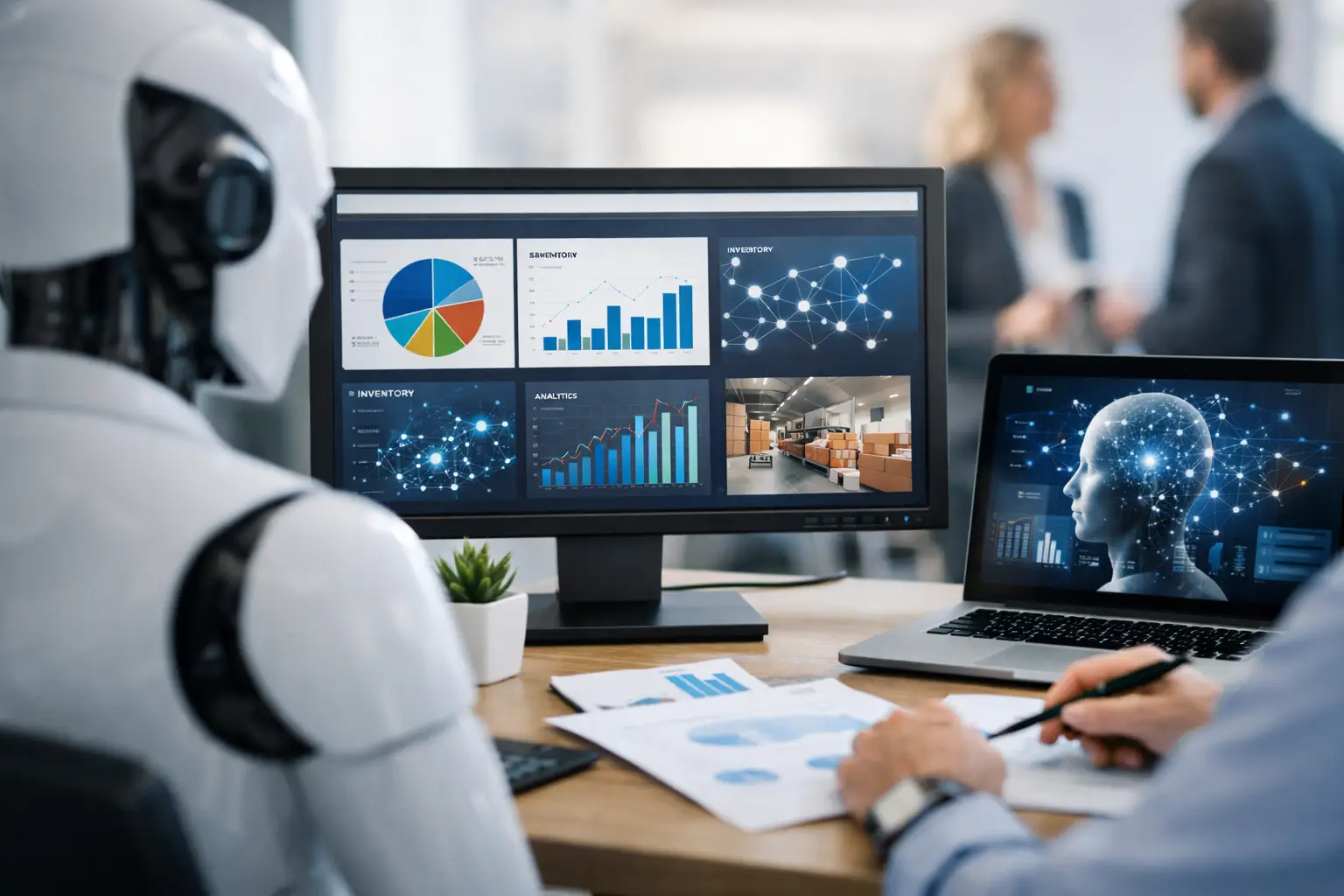
AI in SME ERP Trends That Matter Now
A finance team closes the month three days late, not because revenue was unclear, but because invoice matching, stock adjustments, and approval follow-ups were still sitting in email threads and spreadsheets. That is where AI in SME ERP trends become practical. For growing businesses, AI is no longer a side feature. It is starting to shape how ERP systems handle exceptions, speed up reporting, and improve operational control without forcing teams into enterprise-level complexity.
The real shift is not that SMEs suddenly need advanced data science. It is that ERP platforms are getting better at using everyday business data – invoices, purchasing records, inventory movements, sales history, and payment activity – to help teams make faster and more accurate decisions. The best use cases are not flashy. They remove manual work, strengthen audit trails, and surface issues before they become month-end surprises.
Why AI in SME ERP trends are moving from optional to necessary
For many SMEs, the pressure is coming from three directions at once. Costs are rising, customers expect faster response times, and finance teams are being asked for more frequent reporting with fewer people. At the same time, compliance requirements are not getting simpler. Businesses need cleaner transaction records, more traceable approvals, and better control over invoicing and tax handling.
Traditional ERP already helps by centralizing data. AI changes the value of that centralized data. Instead of only storing transactions, the system can identify patterns, flag outliers, and suggest next actions. That matters most in SMEs because lean teams do not have time to monitor every movement manually.
This does not mean every company should rush into full automation. AI is most useful when processes are already structured. If purchasing approvals are inconsistent or item masters are inaccurate, AI may simply scale confusion faster. The trend, then, is not AI replacing discipline. It is AI amplifying the value of disciplined ERP processes.
The most relevant AI in SME ERP trends
Predictive visibility is replacing reactive reporting
One of the strongest trends is the move from backward-looking reports to forward-looking operational signals. SMEs used to rely on month-end financials and static inventory reports to understand what had already happened. AI-enabled ERP increasingly helps teams see what is likely to happen next.
That can include cash flow projections based on payment behavior, demand forecasting tied to sales trends, or alerts when reorder timing does not match current movement patterns. For operations leaders, this improves planning. For finance managers, it reduces the scramble that happens when variances are discovered too late.
The trade-off is that predictions are only as useful as the underlying data. If stock movements are delayed, invoices are posted late, or sales orders are incomplete, forecast quality drops. SMEs evaluating AI features should look less at marketing claims and more at how the ERP captures clean transactions in real time.
Exception management is becoming more valuable than full automation
Many SMEs assume AI in ERP means removing people from the process. In reality, the more practical trend is smarter exception handling. Instead of trying to automate every step, ERP systems are increasingly designed to identify unusual transactions and route attention where it is actually needed.
For example, the system may flag a supplier invoice that does not align with a purchase order, detect a sudden margin drop on a product line, or surface unusual stock adjustments in a warehouse. That kind of targeted visibility is often more useful than blanket automation because it helps teams focus on the transactions that carry financial or operational risk.
This is especially important in growing businesses where volume increases faster than headcount. Teams do not need more dashboards. They need fewer avoidable surprises.
AI-assisted finance workflows are reducing month-end friction
Finance is one of the clearest areas where AI is becoming practical for SMEs. Reconciliation support, transaction categorization, anomaly detection, and collection prioritization can all shorten routine finance work when embedded into ERP workflows.
The value is not just speed. It is consistency. When the system helps classify transactions, flag unusual postings, or identify likely mismatches, finance teams can spend more time reviewing exceptions and less time manually sorting data. That supports faster month-end closing and stronger financial control.
Still, finance leaders should be cautious about over-automating judgment-heavy tasks. Revenue recognition, tax treatment, and intercompany logic often require policy-driven oversight. AI can assist, but it should not become a black box in areas that affect compliance and audit readiness.
Invoice intelligence is improving accounts payable and receivable
Invoice processing remains a major pain point for SMEs, especially when documents arrive in mixed formats and approvals depend on manual follow-up. AI is improving this area by helping ERP systems extract invoice data, match it against purchasing records, and flag discrepancies earlier.
On the receivables side, AI can help prioritize collections by identifying overdue patterns, likely payment delays, and customer accounts that need faster follow-up. This creates practical gains in working capital management, which is often more valuable to SMEs than broad strategic analytics.
In Singapore, this trend has extra relevance when tied to InvoiceNow and Peppol-enabled workflows. Structured e-invoicing reduces manual errors at the source, and AI becomes more effective when invoice data enters the ERP in a standardized format. For SMEs trying to improve billing speed and compliance, this combination is far more useful than adding disconnected AI tools on top of weak invoicing processes.
What SMEs should look for before adopting AI features
The most common mistake is evaluating AI as if it were separate from ERP design. It is not. If the underlying ERP does not support strong workflows across accounting, purchasing, inventory, and sales, the AI layer will have limited business value.
Start with process readiness. Are approvals standardized? Are stock records current? Is invoice data structured? Can the system provide a clear audit trail across departments? These questions matter more than whether a vendor offers a long list of AI functions.
The second issue is usability. SME teams need AI outputs that are understandable and actionable. A useful system explains why something was flagged, where the issue originated, and what action should be taken next. If the output is vague or difficult to trace, adoption will stall.
The third issue is compliance fit. For businesses dealing with tax reporting, invoice controls, and digital invoicing requirements, AI should support governance rather than weaken it. That means role-based approvals, traceable transaction histories, and workflows that align with regulatory expectations.
Where implementation value really comes from
The best results usually come from narrow, high-friction use cases first. Accounts payable matching, stock exception alerts, late payment prioritization, and forecast support are all areas where SMEs can see measurable gains without redesigning the entire business around AI.
This staged approach also reduces risk. Teams can validate data quality, adjust approval rules, and build trust in the system before expanding automation. That matters because AI adoption in ERP is as much an operational change issue as it is a software issue.
For growth-stage SMEs, implementation support also matters more than many buyers expect. AI features are only useful when they are configured around actual business workflows, item structures, and reporting needs. A platform such as A2000ERP is strongest when AI sits inside a broader ERP foundation that already supports finance, inventory, procurement, invoicing, and compliance-focused processes in one environment.
What the next phase of AI in SME ERP trends looks like
The next phase is likely to be less about headline features and more about embedded decision support. SMEs will expect ERP systems to recommend actions inside daily workflows, not just generate reports after the fact. That could mean suggesting reorder quantities based on current sales velocity, highlighting approval bottlenecks before they delay fulfillment, or identifying customers whose payment behavior is starting to affect cash planning.
There will also be growing pressure for AI to work alongside structured digital processes such as e-invoicing. As InvoiceNow adoption expands, businesses that already use ERP to manage invoicing, purchasing, and finance data in a connected way will be in a stronger position to benefit from AI insights with less cleanup effort.
The key point is simple. AI should make ERP more operationally useful, not more complicated. For SMEs, the winning trend is not automation for its own sake. It is better visibility, faster control, and fewer manual gaps between finance and operations. The smartest next step is to focus on the processes where delays, errors, or poor traceability are already costing time and cash.