

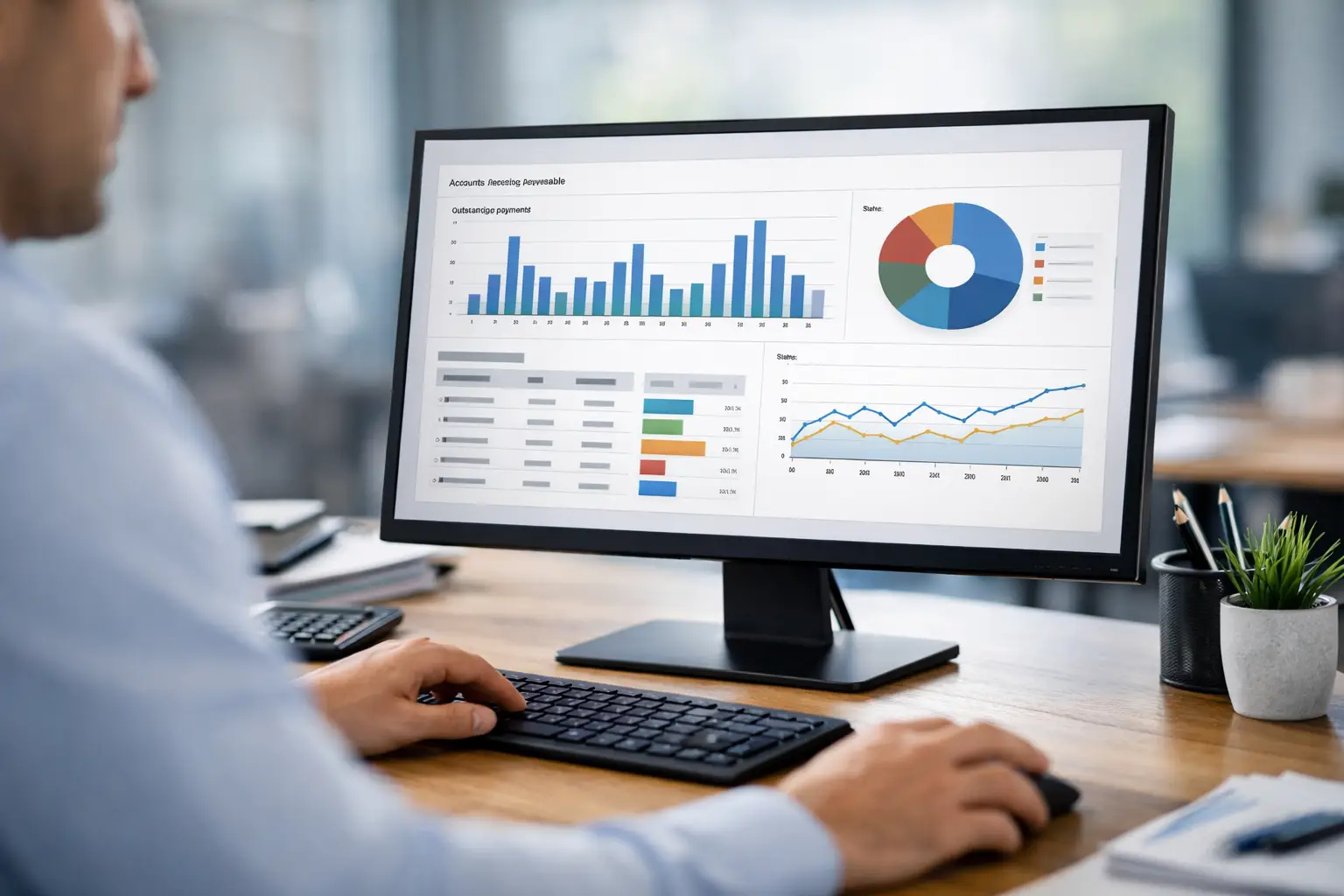
A Real Time Accounts Receivable Dashboard
A customer says payment was sent, yet the invoice is still open in the ledger. A sales manager promises credit to a repeat buyer without seeing that three older invoices are overdue. Finance spends Friday exporting aging reports that are already outdated on Monday. A real time accounts receivable dashboard addresses these gaps by giving finance and operations one current view of what is owed, what is due, and what needs action.
For a growing business, accounts receivable is not simply an accounting balance. It is working capital tied up in customer relationships, sales processes, inventory commitments, and compliance records. A dashboard should turn that complexity into clear priorities without replacing the detailed records and controls that finance teams need.
What a Real Time Accounts Receivable Dashboard Should Show
A useful dashboard does more than place an aging report on a screen. It brings together invoices, credit notes, payment receipts, customer account history, and collection activity so users can act on current information. The value comes from connecting operational events to financial status as they occur.
The starting point is total outstanding receivables, but the number needs context. Finance leaders need to see how much is current, how much is nearing its due date, and how much has moved into each overdue bucket. Separating balances into current, 1-30 days overdue, 31-60 days overdue, 61-90 days overdue, and over 90 days helps teams identify where cash risk is building.
A well-designed view also shows invoices due today and this week, recent payments received, unapplied customer payments, disputed invoices, and credit holds. These are not just reporting fields. They identify the next work queue for collections staff and clarify whether a delayed payment is a follow-up issue, a billing issue, or a reconciliation issue.
Customer-level visibility matters just as much. A high total receivables figure may be manageable if it is spread across reliable customers with agreed payment terms. It carries more risk when a large share is concentrated in a small group of accounts or tied to customers whose overdue balances are increasing. The dashboard should make that concentration visible before it becomes a cash-flow problem.
Why Real-Time Visibility Changes Collection Decisions
Traditional month-end reporting answers an important question: what was the receivables position at a point in time? It does not always answer the operational question: what should the team do now?
When invoice and payment data update promptly, finance can prioritize follow-up based on value, due date, customer history, and exception status. A collector can focus first on a large invoice that is overdue and has no recorded dispute, rather than working through a static list in date order. A finance manager can see whether a payment received this morning has been allocated, preventing an unnecessary reminder from being sent to a customer.
This visibility also improves communication between finance and sales. Sales teams often have the customer context that explains a delayed payment, while finance has the evidence needed to manage exposure. A shared dashboard creates a practical discussion around facts: open balance, oldest invoice, promised payment date, dispute reason, and credit status. It reduces the reliance on disconnected spreadsheets and informal updates.
Real-time does not mean every metric needs to refresh every second. For many SMEs, near-immediate updates when invoices are issued, receipts are posted, or credit notes are approved are sufficient. The appropriate refresh standard depends on payment volume, approval workflows, and how often customer-facing teams make credit decisions. What matters is that users know the status is current enough to act with confidence.
Metrics That Drive Better Cash Control
The strongest dashboards balance high-level management indicators with practical follow-up details. At minimum, leadership should be able to monitor total receivables, overdue receivables, collection performance, and cash expected within the next seven, 30, and 60 days.
Days sales outstanding can be useful for identifying whether collection performance is improving or deteriorating over time. However, it should not be treated as a stand-alone score. A business with seasonal sales, milestone billing, or a few large contract customers may see swings that require explanation. Pair it with aging trends, payment-term compliance, and customer concentration to get a more reliable picture.
Invoice-level exceptions often produce faster results than broad averages. For example, an invoice that has passed its due date without a reminder, a payment that remains unallocated, or a customer whose credit limit has been exceeded deserves attention. These exceptions are where a dashboard becomes an operating tool rather than a presentation for month-end meetings.
For businesses that carry stock or fulfill orders before payment, the dashboard should also support cross-functional decisions. If a customer has a growing overdue balance, the sales order and fulfillment teams need a controlled process for reviewing further credit exposure. That does not require automatically stopping every order. A long-standing customer with a documented payment arrangement may need different treatment from a new account with repeated late payments.
Build the Dashboard on Clean Transaction Data
A dashboard is only as reliable as the records feeding it. If invoices are created outside the core system, payments are recorded days later, or credit notes are not linked correctly to original invoices, the display can look precise while giving the wrong answer.
Start with consistent customer master data, approved payment terms, invoice dates, due dates, tax treatment, and unique document references. Payment receipts should be posted promptly and matched to the correct customer and invoice wherever possible. Clear ownership is essential: finance may own posting and reconciliation, while sales owns customer account context and operations owns order-release decisions.
Document status also matters. Teams should distinguish between draft, approved, sent, disputed, partially paid, paid, canceled, and written-off invoices. Combining those states into one open-balance number hides the reason an item remains outstanding. A clean status model creates better audit trails and makes aging reports more credible during review.
In Singapore, InvoiceNow and Peppol-connected e-invoicing workflows can strengthen this foundation by supporting structured invoice exchange and clearer transmission status. A dashboard can surface whether an invoice has been generated, transmitted, accepted by the receiving process, or requires attention. That does not guarantee payment, but it helps separate delivery issues from genuine collection delays and supports a more traceable invoicing process.
Turn Dashboard Signals Into a Collection Workflow
The dashboard should lead to a defined response, not passive monitoring. When an invoice approaches its due date, the team can confirm that the customer received it and that no documentation is missing. Once overdue, the next step may be a reminder, account review, dispute resolution, or escalation according to the customer relationship and the amount at risk.
Set practical rules around ownership and timing. A small overdue invoice from a reliable customer may receive an automated reminder, while a large balance from a customer nearing its credit limit should trigger direct review. The goal is consistency without treating every account identically.
Finance should review collection notes and promised payment dates alongside invoice aging. A promised payment date is useful only if it is visible, assigned to an owner, and checked when the date passes. This simple discipline prevents the common problem of repeatedly contacting customers without recording what was agreed.
Choosing the Right Level of Detail
More data is not always more useful. Executives need a concise view of total exposure, cash outlook, and material risks. Collections staff need invoice-level details and action queues. Sales managers need customer status and credit guidance without access to unnecessary accounting information.
Role-based views help each team act faster while maintaining appropriate financial control. Drill-down capability is valuable because a headline number should always lead back to source transactions, supporting faster reconciliation and stronger audit readiness.
A2000ERP can bring receivables, invoicing, sales, inventory, and accounting data into a unified operating view, reducing the manual effort required to reconcile information across separate files and systems. For SMEs, that connected structure is often the difference between reacting to late payments and managing receivables before they affect growth plans.
The best dashboard is not the one with the most charts. It is the one that helps the right person see an issue early, understand the next action, and protect cash without creating friction for good customers.