

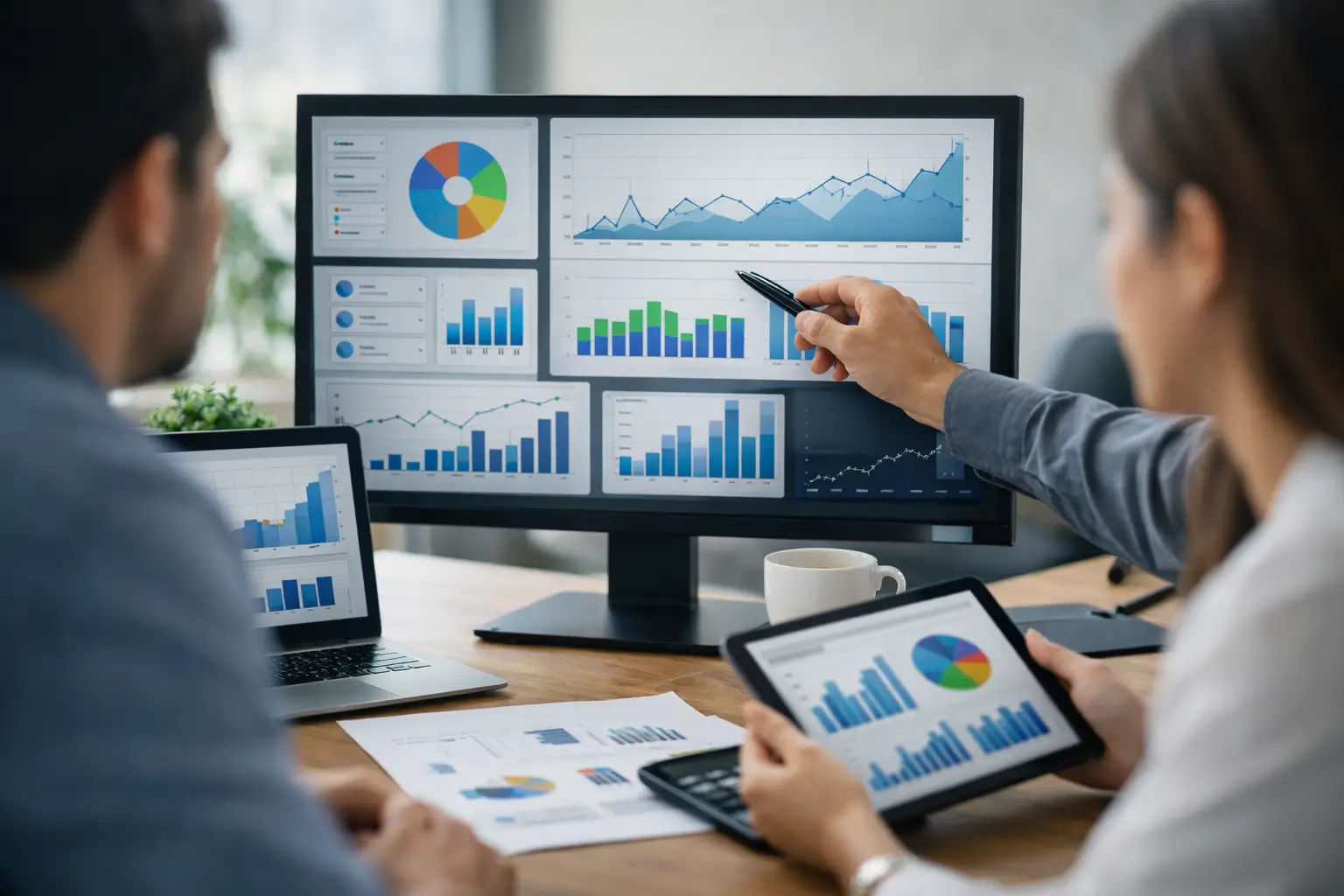
Best Finance Dashboards for SMEs
If your finance team still waits until month-end to understand cash position, overdue receivables, or margin by product line, the problem is not just reporting speed. It is visibility. The best finance dashboards for SMEs give decision-makers a live view of performance, risk, and working capital so they can act before small issues become expensive ones.
For growing businesses, that matters more than most leaders expect. A delayed view of collections can affect payroll planning. A missing inventory valuation trend can distort gross margin. A finance dashboard is not there to make reports look cleaner. It exists to support faster month-end closing, tighter financial control, and better coordination between finance, sales, purchasing, and operations.
What makes the best finance dashboards for SMEs
A useful SME dashboard is not the one with the most charts. It is the one that helps people make decisions quickly and correctly. That usually means a dashboard built around a small set of operationally relevant metrics, updated in real time or close to it, with drill-down access when something looks off.
For SMEs, the most valuable finance dashboards tend to combine three things. First, they show current performance clearly – cash balance, receivables aging, payables due, sales trends, and profit movement. Second, they connect finance to operational drivers such as invoicing status, stock movement, purchasing commitments, and order fulfillment. Third, they create traceability. If a number changes, the team should be able to see why.
That last point is often overlooked. Many businesses can generate a summary chart. Fewer can explain the transactions behind it without opening multiple spreadsheets, asking three departments, and losing half a day. For an SME, that difference affects confidence as much as efficiency.
The dashboards that matter most
Not every SME needs the same dashboard layout, but most finance teams benefit from the same core views.
A cash flow dashboard should come first. This is the control center for short-term decision-making. It should show bank balances, expected inflows, expected outflows, overdue invoices, and upcoming payment obligations. A dashboard like this helps leaders spot pressure early instead of reacting after liquidity tightens.
An accounts receivable dashboard is equally important, especially for businesses with long payment cycles or inconsistent collection patterns. The right view will track aging buckets, top overdue customers, disputed invoices, collection progress, and invoice turnaround time. If your invoicing process is slow or fragmented, even strong sales growth can still create a cash problem.
An accounts payable dashboard helps protect supplier relationships while controlling cash timing. SMEs often focus heavily on collections and under-manage outgoing obligations. A good payable dashboard shows due dates, supplier exposure, early payment opportunities, and purchase commitments already entered by procurement.
Then there is the profit and margin dashboard. This should not stop at top-line revenue and net profit. It should reveal gross margin by customer, product, channel, or location where relevant. For inventory-based businesses, this is where finance dashboards become especially valuable. Margin decline is not always a pricing issue. It can come from stock write-offs, purchasing cost shifts, fulfillment inefficiencies, or inaccurate inventory data.
A month-end close dashboard is another strong addition for businesses trying to reduce reporting delays. It can track bank reconciliation status, journal completion, intercompany checks if relevant, unreconciled transactions, and outstanding approvals. This may sound internal, but it directly affects management reporting quality.
Why SMEs struggle with finance dashboards
In most cases, the issue is not a lack of data. It is disconnected data.
Finance may have accounting records. Sales may track customer status elsewhere. Inventory may sit in a separate system. Procurement may manage purchase commitments through email or spreadsheets. When leaders ask for one clear answer – for example, why cash is tightening even though revenue is up – teams end up manually combining reports that do not align.
That creates three common problems. Reporting becomes slow, numbers become harder to trust, and the finance team spends more time preparing information than analyzing it.
This is why dashboard quality depends heavily on system structure. If your dashboard sits on top of fragmented inputs, it may still look polished while hiding important timing gaps. For example, an accounts receivable chart is only as useful as the invoicing process behind it. If invoices are issued late, disputed manually, or tracked outside the system, dashboard insights arrive too late to improve collections.
How to evaluate finance dashboards for your business
The best finance dashboards for SMEs are not selected based on visuals alone. They should be evaluated based on business control.
Start with speed. Can your team see the current position without waiting for manual consolidation? Real-time visibility is especially important for cash flow, receivables, payables, and inventory-linked financial data.
Next, assess drill-down capability. A dashboard should not stop at signaling a problem. It should help users move from summary to transaction detail quickly. If gross margin drops, can finance identify the item, order, supplier cost change, or stock adjustment behind it?
Then look at cross-functional data flow. SME finance performance is shaped by what happens before accounting entries are finalized. Sales orders, delivery status, procurement timing, warehouse movements, and invoicing all affect financial outcomes. A dashboard is stronger when these workflows are connected rather than manually stitched together later.
Compliance matters too, particularly for businesses operating in regulated environments or preparing for growth. Dashboards should support audit trails, approval visibility, tax reporting readiness, and structured document flow. In Singapore, for example, businesses also benefit from finance systems that align with GST reporting and digital invoicing requirements such as InvoiceNow. That does not just help with compliance. It can improve invoice delivery speed, reduce manual handling, and support more accurate receivables tracking.
What a good dashboard setup looks like in practice
A practical SME setup usually includes role-based visibility. Business owners want a high-level view of cash, profit, overdue receivables, and sales trends. Finance managers need deeper access to aging, reconciliations, tax status, and close progress. Operations leaders may need visibility into inventory valuation, purchase commitments, and order-to-cash timing.
This matters because one dashboard cannot serve everyone equally well. If it is too high-level, finance cannot act. If it is too detailed, management stops using it. The best approach is a shared data foundation with dashboards tailored to decision type.
Automation also plays a major role. A dashboard should update from actual transactions, not from manually maintained files. That includes invoice generation, payment matching, stock movements, purchasing entries, and sales activity. Once those inputs are structured, finance reporting becomes more reliable and much less dependent on key individuals.
For many SMEs, this is where ERP-based dashboards become more effective than standalone reporting layers. When finance, sales, purchasing, and inventory operate inside one system, the dashboard reflects the business as it runs, not as it was manually reconstructed later. A2000ERP is built around this model, combining finance and operational workflows in one environment so SMEs can improve traceability, accelerate reporting, and support structured growth without adding enterprise-level complexity.
Red flags to avoid
Some dashboards look impressive during a demo but create little value after implementation. One warning sign is an overdesigned interface with too many metrics and no clear priority. When everything is highlighted, nothing is truly visible.
Another is heavy reliance on exports. If users must download data into spreadsheets to understand the chart, the dashboard is not doing its job. The same applies when KPI definitions change between departments. A finance dashboard only supports control when everyone is working from the same logic.
Be careful with dashboards that show financial outcomes without showing operational causes. Revenue may be up, but if fulfillment delays are growing or invoice cycles are slowing, the picture is incomplete. SMEs need dashboards that explain movement, not just display it.
Choosing for the next stage, not the last one
A dashboard that works for a 10-person business may fail once transaction volumes increase, locations expand, or product lines become more complex. SMEs should choose dashboards based on the next phase of growth, not just current reporting pain.
That means asking practical questions. Will this setup still work when you add a warehouse? When your finance team needs tighter approval controls? When digital invoicing volume rises? When month-end close needs to happen faster because management decisions cannot wait?
The right finance dashboard should make growth easier to manage, not harder to explain. It should reduce manual work, improve auditability, and give leaders confidence that the numbers reflect what is actually happening across the business.
A good dashboard does not replace financial discipline. It supports it. When your data is structured, your processes are connected, and your teams can see issues early, finance stops being a backward-looking function and becomes a stronger operating control for the business.
