

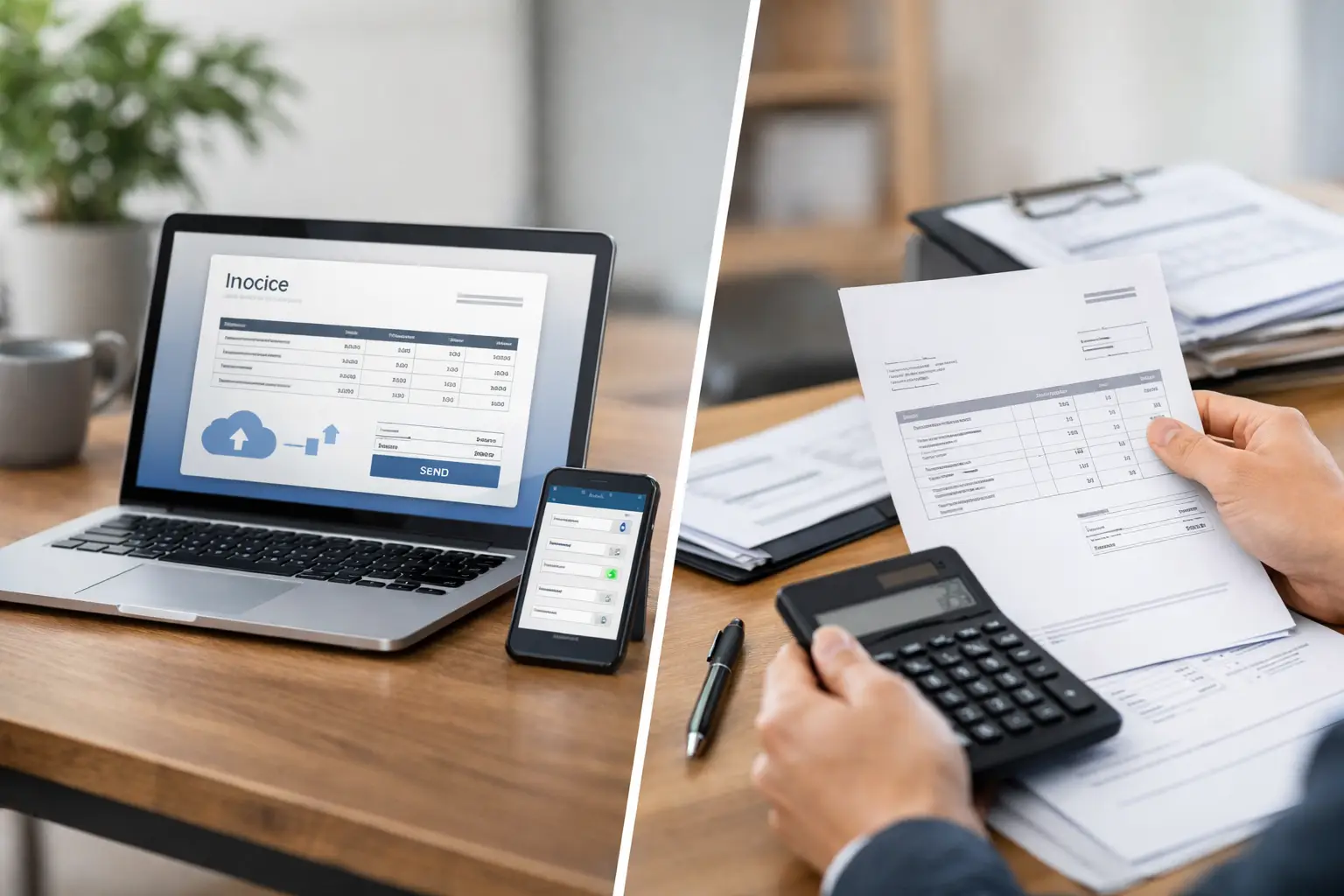
InvoiceNow vs PDF Invoicing
If your finance team still emails invoice PDFs, the issue is usually not document quality. It is the amount of manual work sitting behind every invoice – keying data, checking formats, chasing mismatches, and correcting errors during reconciliation. That is where InvoiceNow vs PDF invoicing becomes a practical business decision, not just a format preference.
For growing SMEs, invoicing affects cash flow, audit readiness, supplier relationships, and month-end speed. A PDF can look professional, but it is still largely built for human reading. InvoiceNow is built for system-to-system exchange through the Peppol network, which means invoice data can move directly into the recipient’s finance system in a structured format. That difference changes how much work your team does after the invoice is sent.
InvoiceNow vs PDF invoicing: what actually changes?
At a surface level, both methods deliver the same commercial message: who is billing whom, for what, and how much. The operational difference is what happens next.
With PDF invoicing, the recipient usually receives a file by email, opens it, reviews it, and then re-enters the details into their accounting or ERP system. Even if they use OCR or scanning tools, validation is often still needed. Line descriptions can be inconsistent, tax treatment may need checking, and document versions can create confusion if changes are made after sending.
InvoiceNow works differently. Because the invoice is sent as structured digital data, the receiving system can ingest the information directly. Vendor name, invoice number, due date, tax values, line items, and totals are transmitted in a standard format. That reduces manual encoding and creates a cleaner trail from invoice issuance to posting and payment.
For an SME with modest invoice volume, the gap may seem small at first. But once invoice counts rise, or when multiple entities, departments, and approvers are involved, PDF-based invoicing starts to create friction across finance operations.
Why PDF invoicing still feels easier
PDF invoicing remains common for a reason. It is familiar, flexible, and requires very little change management. Almost every customer can receive a PDF by email. Your staff already know the process. The document is readable, portable, and easy to attach to approval workflows.
There is also a perception that PDF is low cost. If you already have accounting software that can generate a PDF invoice, switching to a structured e-invoicing model may seem unnecessary. For smaller businesses with a limited number of customers, low transaction complexity, and no immediate compliance pressure, that view can be reasonable.
But easy to send is not the same as efficient to process. PDF invoicing often shifts work downstream. Someone still has to read it, match it, file it, and resolve exceptions. The sender may not see that burden directly, but the business still pays for it through slower processing, delayed approvals, and avoidable disputes.
The hidden cost of human-readable invoices
The biggest weakness of PDF invoicing is not the file itself. It is dependence on human interpretation. If a buyer enters the wrong PO number, misreads tax amounts, or skips a line item, the invoice can be delayed even when the original PDF is correct.
That creates extra follow-up for finance teams. Staff spend time answering status queries, resending documents, and explaining data that should have flowed automatically. Over time, these small interruptions affect productivity more than many businesses expect.
Where InvoiceNow creates operational value
InvoiceNow is especially valuable when the priority is reducing manual touchpoints. Structured e-invoicing improves consistency because both sender and receiver work from standardized fields rather than a visual document alone. That matters for finance control.
In practical terms, InvoiceNow helps businesses process invoices faster, reduce rekeying errors, and maintain better traceability. For finance managers, that can support faster month-end closing. For operations teams, it can reduce disputes linked to missing references or mismatched billing details. For leadership, it improves visibility because invoice data enters the system in a form that can be reported and analyzed immediately.
This is also where ERP matters. When invoicing is connected to sales, purchasing, inventory, and accounting, structured invoice data has more value than a static PDF. It can be matched against transactions, tax settings, and customer records in real time. That leads to stronger control, not just faster delivery.
Compliance matters more than format preference
In Singapore, InvoiceNow has gained traction because it aligns with national digitalization and Peppol e-invoicing standards. For SMEs operating in regulated environments or serving buyers that prefer structured e-invoices, this is more than a workflow upgrade. It becomes part of compliance readiness and business credibility.
A PDF may still be accepted, but acceptance is not the same as readiness. As trading partners increase their digital requirements, businesses relying on email-based invoices may find themselves under pressure to catch up quickly. Moving earlier gives finance teams more control over implementation and internal process design.
That said, not every business needs to eliminate PDFs overnight. It depends on customer requirements, invoice volume, and system maturity. Some companies will operate with both methods for a period while they transition key customers or suppliers to InvoiceNow.
InvoiceNow vs PDF invoicing for SMEs
For SMEs, the decision often comes down to scale, control, and future readiness.
If your invoicing process is low volume, mostly domestic, and handled by a small team with minimal friction, PDF invoicing may remain workable in the short term. It is simple, recognizable, and does not demand immediate systems change.
If your business is growing, handling more transactions, or struggling with delayed approvals, reconciliation effort, and fragmented records, InvoiceNow becomes far more compelling. The value is not only in sending invoices digitally. It is in reducing dependency on manual finance work as the business expands.
This is where many SMEs underestimate risk. Manual invoicing methods often hold up better at 50 invoices a month than at 500. Once more people, entities, tax scenarios, and approval layers are involved, PDF workflows start exposing gaps in control and visibility.
The trade-off: flexibility versus structure
PDF invoicing gives you flexibility because it works almost everywhere. InvoiceNow gives you structure, which is usually better for control and efficiency. The trade-off is that structured invoicing benefits most from proper system setup.
If your underlying item codes, customer records, tax mapping, or approval logic are inconsistent, moving to InvoiceNow will expose those issues. That is not a weakness of InvoiceNow. It simply means the business is moving from informal process habits to structured data discipline.
For many SMEs, that shift is exactly the point. Clean invoicing depends on clean operational data. Businesses that want real-time visibility and stronger audit trails usually benefit from making that change sooner rather than later.
What to look for in your invoicing system
The key question is not whether your software can create a PDF. Almost all finance systems can do that. The more useful question is whether your invoicing process supports automation, validation, compliance, and traceability from end to end.
A capable ERP environment should let you generate invoices from approved sales transactions, validate tax treatment, maintain document history, and support InvoiceNow where required. It should also help your team manage exceptions without losing visibility. That is how invoicing becomes part of a controlled finance process rather than a disconnected admin task.
For businesses planning around InvoiceNow adoption, implementation quality matters. The invoicing method alone will not solve process issues if finance, sales, and customer master data remain fragmented. A structured rollout tied to broader ERP workflows tends to produce better results than treating e-invoicing as a standalone feature.
A2000ERP fits this reality because InvoiceNow readiness works best when invoicing, accounting, inventory, and operational controls sit inside one system instead of separate tools and spreadsheets.
The better choice depends on where your business is headed
InvoiceNow is not automatically the right answer for every invoice your business sends today. But if your priority is fewer manual touchpoints, better data accuracy, stronger compliance readiness, and a finance function that can scale without adding unnecessary admin, it is hard to argue that PDF invoicing is the better long-term model.
PDFs are readable. InvoiceNow is processable. That distinction matters more as transaction volume grows and finance teams are asked to do more with the same headcount.
If your current invoicing process feels manageable, look one step ahead. The best time to improve invoicing is before growth exposes the limits of manual work.