

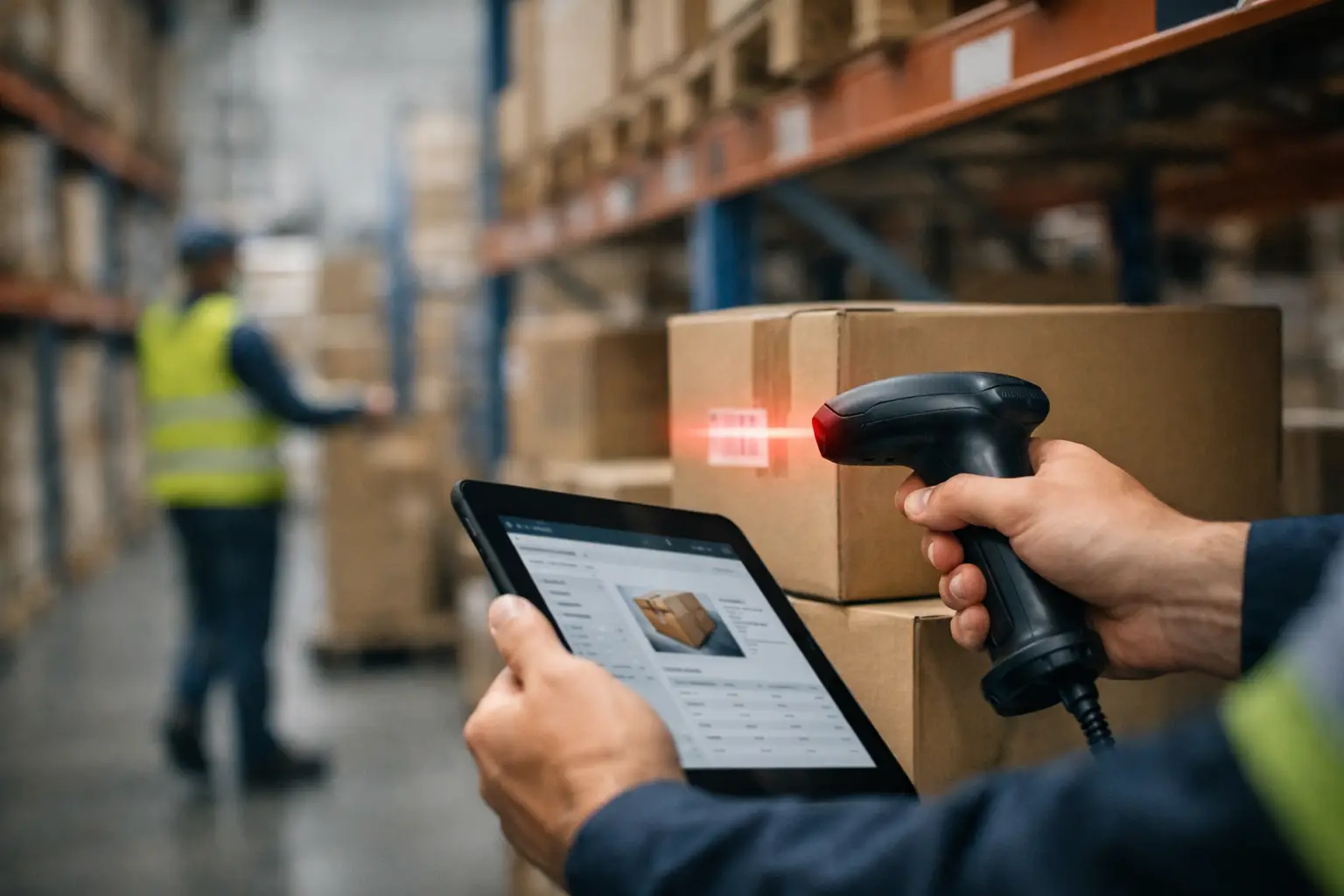
Warehouse Management Software With Barcode Scanning
A missed scan at receiving can turn into three separate problems by Friday – a stock discrepancy, a delayed shipment, and a finance team chasing the wrong numbers. That is why warehouse management software with barcode scanning matters so much for growing businesses. It replaces guesswork and paper-based handling with real-time stock movement, clearer accountability, and faster warehouse execution.
For small and midsize companies, the value is not just in scanning labels. It is in connecting warehouse activity to purchasing, sales, invoicing, and inventory control so every movement updates the business record immediately. When warehouse data is accurate at the source, downstream processes become easier to manage, audit, and scale.
What warehouse management software with barcode scanning actually does
At a basic level, barcode-enabled warehouse software lets staff scan items, bins, cartons, or locations using handheld devices or mobile tools instead of writing transactions manually. But the bigger advantage is process control. The software validates what is being moved, where it is going, and whether that transaction matches an approved business document such as a purchase order, sales order, or stock transfer.
That matters because warehouses rarely fail due to one dramatic error. More often, they lose control through small repeated mistakes – the wrong item picked, a transfer not recorded, a return placed back into the wrong location, or a cycle count adjusted without context. Barcode scanning reduces those errors by forcing confirmation at the point of action.
In practical terms, this means receiving teams can scan incoming goods against expected deliveries, storekeepers can move stock between zones with a digital trail, and pickers can confirm the right item before packing. Inventory records stay current because updates happen as work is performed, not hours later when someone enters paper notes into a spreadsheet.
Where barcode scanning delivers the biggest operational gains
Receiving is usually the first place businesses feel the impact. Without scanning, staff may rely on printed documents and visual checks, which slows down unloading and increases the chance of quantity mismatches. With barcode-based receiving, items can be verified against open purchase orders, discrepancies can be flagged immediately, and stock can be posted into available inventory faster.
Picking and packing is another high-value area. A warehouse may process hundreds of lines in a day, and even a low error rate can lead to reshipments, customer complaints, and credit note adjustments. Barcode confirmation helps ensure the item picked is the item ordered. That protects service levels while reducing the hidden cost of correcting avoidable mistakes.
Cycle counting also improves significantly. Instead of shutting down sections of the warehouse for full physical counts, businesses can run controlled counts by location, category, or fast-moving items. Staff scan locations and items directly into the system, which shortens count time and produces a cleaner audit trail.
Transfers and internal movements often get less attention, but they are a major source of stock inaccuracy. If stock is moved physically without being recorded digitally, the system becomes unreliable. Barcode scanning closes that gap by making internal movement easier to record in real time, which supports better replenishment planning and less time spent searching for missing inventory.
Why stand-alone scanning tools are often not enough
Some businesses begin with barcode apps or simple scanning utilities and get short-term gains. That can work at a very small scale. The problem starts when warehouse activity needs to tie back to purchasing, sales, finance, or compliance processes.
If a warehouse system does not sync properly with the core business platform, teams end up reconciling transactions across multiple systems. Receiving may not match supplier invoices. Delivered quantities may not align with billed quantities. Inventory adjustments may happen without proper approval or financial visibility. At that point, the business has moved the problem, not solved it.
This is why many SMEs need warehouse management software as part of a broader ERP environment. The warehouse should not operate as an isolated function. It should feed a shared data model that supports stock valuation, procurement control, customer fulfillment, and faster month-end closing.
What to look for in warehouse management software with barcode scanning
The first requirement is real-time inventory visibility. If scans do not update stock immediately, the system loses much of its value. Sales teams, procurement staff, and finance managers should all be working from the same current inventory position.
The second is transaction traceability. You need to know who received, moved, adjusted, or picked stock, along with timestamps and document references. This is essential for audit control, internal accountability, and operational troubleshooting.
The third is document matching. Good software should connect scans to business transactions such as purchase receipts, sales fulfillment, stock transfers, returns, and count adjustments. This reduces manual reconciliation and supports cleaner records.
The fourth is location control. Businesses with multiple bins, zones, stores, or warehouses need more than item-level tracking. They need to know exactly where stock sits and how it moves. Location-level visibility reduces search time and improves replenishment discipline.
The fifth is mobile usability. If the scanning process is slow, confusing, or dependent on excessive manual input, warehouse adoption suffers. The best systems guide the user through the transaction with clear prompts and minimal room for error.
For many growing companies, it also makes sense to assess whether the software supports integration with finance and digital invoicing workflows. In a structured ERP environment, warehouse accuracy can support cleaner sales invoicing, fewer delivery disputes, and stronger transaction records. For businesses operating in Singapore, alignment with InvoiceNow can add practical value by improving how fulfillment and invoicing processes connect across the wider business.
The trade-offs business leaders should understand
Barcode scanning improves control, but it does require process discipline. If warehouse staff are used to informal workarounds, the shift can feel restrictive at first. That is not a flaw in the system. It is usually a sign that undocumented habits are being replaced by accountable workflows.
There is also an implementation question. A simpler setup may be faster to deploy, but it may not handle multi-location inventory, batch tracking, mobile approvals, or integrated finance requirements as the business grows. On the other hand, overengineering the warehouse process can slow adoption and create unnecessary complexity for SMEs.
The right answer depends on transaction volume, number of locations, item complexity, and reporting needs. A distributor handling thousands of SKU movements each week will need stricter controls than a business with a smaller, slower-moving stock profile. A company managing regulated or high-value inventory may also need tighter traceability from day one.
Why this matters beyond the warehouse floor
Warehouse errors rarely stay in the warehouse. They affect purchasing decisions when reorder data is wrong. They affect customer experience when shipments are delayed or incomplete. They affect finance when stock balances need repeated adjustment or invoices are disputed. They also affect management reporting, because decisions made from inaccurate inventory data are usually expensive.
That is why warehouse management software with barcode scanning should be treated as a business control tool, not just an operational convenience. It improves stock accuracy, but it also strengthens audit readiness, financial reliability, and process consistency across departments.
For SMEs trying to scale without adding administrative overhead, this is a meaningful shift. Better scan-based execution means fewer manual checks, fewer exceptions, and less time spent correcting errors after the fact. It creates the kind of real-time visibility that supports faster responses and more confident planning.
A2000ERP approaches this from the perspective most growing businesses actually need: structured operations connected to finance, inventory, and invoicing in one system. That matters when the goal is not only to move stock faster, but to reduce manual work, improve traceability, and support controlled growth.
If your warehouse still depends on paper notes, delayed stock updates, or disconnected tools, barcode scanning is not a minor upgrade. It is often the point where inventory control starts becoming reliable enough to support the rest of the business.